


Liberia
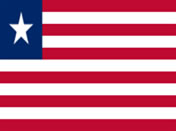
Background:
Eight years of civil strife were brought to a close in 1997 when free and open presidential and legislative elections were held. President TAYLOR now holds strong executive power with no real political opposition. Years of fighting, coupled with the flight of most businesses, have disrupted formal economic activity. A still unsettled domestic security situation has slowed the process of rebuilding the social and economic structure of this war-torn country. In 2001, the UN imposed sanctions on Liberian diamonds, along with an arms embargo and a travel ban on government officials, for Liberia's support of the rebel insurgency in Sierra Leone. Renewed rebel activity has further eroded stability and economic activity. An August 2003 peace agreement ended the war and prompted the resignation of former president Charles TAYLOR, who faces war crimes charges in The Hague related to his involvement in Sierra Leone's civil war. After two years of rule by a transitional government, democratic elections in late 2005 brought President Ellen JOHNSON SIRLEAF to power. The UN Mission in Liberia (UNMIL) maintains a strong presence throughout the country, but the security situation is still fragile and the process of rebuilding the social and economic structure of this war-torn country will take many years.
People: Nationality: Liberian(s). Population: 3 million. Ethnic groups: Kpelle 20%, Bassa 16%, Gio 8%, Kru 7%, 49% spread over 12 other ethnic groups. Religions: Christian 40%, Animist 40%, Muslim 20%. Languages: English (official). There are 16 indigenous languages. Literacy: 20-40% (est). Natural resources: Deposits of iron ore, rubber, timber, diamonds, gold and tin, hydropower; crude oil along Atlantic Coast. Diplomatic Missions Embassy of the Republic of Liberia Embassy of Liberia, Washington, D.C., USA. Liberian Diplomatic Missions Abroad List of Liberian Diplomatic Missions Abroad. Agriculture products: Coffee, cocoa, sugarcane, rice, cassava, palm oil, bananas, plantains, citrus, pineapple, sweet potatoes, corn, and vegetables. Industries: Iron ore, rubber, palm oil processing, timber, diamonds, gold, beverages, construction. Exports partners: Belgium 41.4%, Spain 11.6%, USA 9.1%, Malaysia 5.5%, Thailand 4.6%, Poland 4.6%, Germany 4.4% (2005) Imports partners: South Korea 37.9%, Japan 21.1%, Singapore 14.2%, Croatia 4.7% (2005) Currency: Liberian Dollar (LRD) Source: Ministry of Foreign Affairs Liberia nad others. border countries: Guinea, Cote d'Ivoire, Sierra Leone
Official Name:
Republic of Liberia
short form: Liberia
ISO Country Code: ly
Time:
Local Time = UTC +0h
Actual Time: Mon-Oct-25 13:30
Country Calling Code: +231
Capital City: Monrovia (pop. 600 000)
Other Cities: Buchanan (est. 300 000), Ganta
(est. 290 000), Gbarnga (est. 150 000),
Kakata (est. 100 000), Harbel (est. 136 000)
Government:
Type: Republic.
Independence: 26 July 1847 (from American
Colonization Society).
Constitution: 6 January 1986.
Geography:
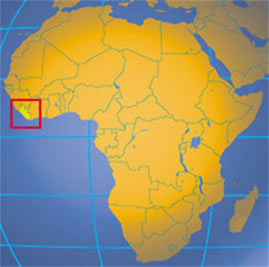
Location: Western Africa, bordering the North
Atlantic Ocean, between Cote d'Ivoire and
Sierra Leone.
Area: 111 369 sq. km. (43 000 sq. mi.).
Terrain: Three areas--Mangrove swamps and
beaches along the coast, wooded hills and
semideciduous shrublands along the immediate
interior, low mountains in northeast, dense
tropical forests and plateaus in the interior.
Liberia has 40% of West Africa's rain forest.
Climate: tropical; hot, humid; in winter: dry
with hot days and cool to cold nights; dust-laden
harmattan winds blow from the Sahara (December to
March) in summer: wet, cloudy with frequent
heavy showers.